Why ISAC Matters for 6G?
ISAC is essential for 6G, yet traditional isolated radar-and-comm hardware drives up deployment cost and wastes spectral resources. TMYTEK's mmWave solution closes this gap with a flexible, extendable frontend: by pairing advanced beamforming with SDR connectivity, researchers can plug MATLAB, Python, or C++ algorithms straight into a real RF environment. Microsecond-class hardware switching eliminates mutual interference between sensing and communication, enabling genuine closed-loop joint validation.
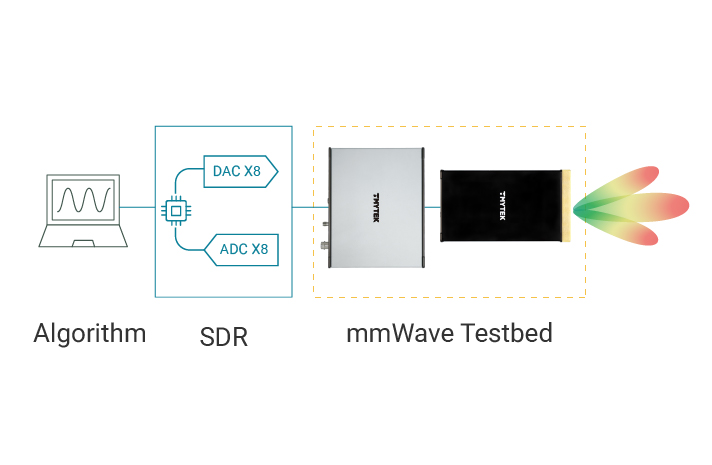
Extendable ISAC Beamforming Frontend
Supports joint waveforms, such as 5G NR-based ISAC or FMCW-like signals, so a single RF channel can carry data payloads and radar sensing carriers at the same time.
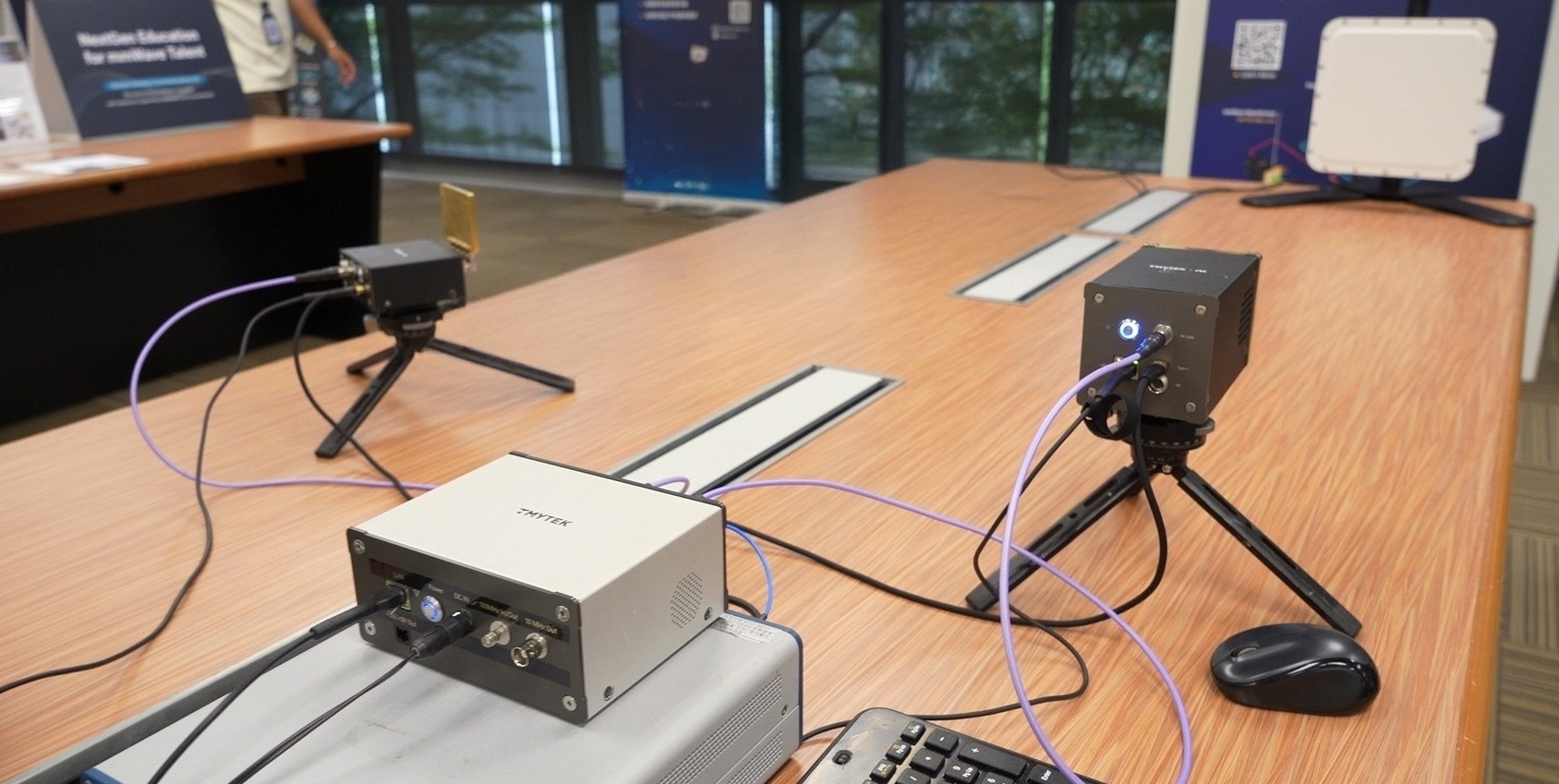
Rapid ISAC/JCAS Prototyping, From Theory to Testbed
Interfaces seamlessly with mainstream baseband hardware and simulation software to accelerate mmWave algorithm deployment and shorten R&D cycles.
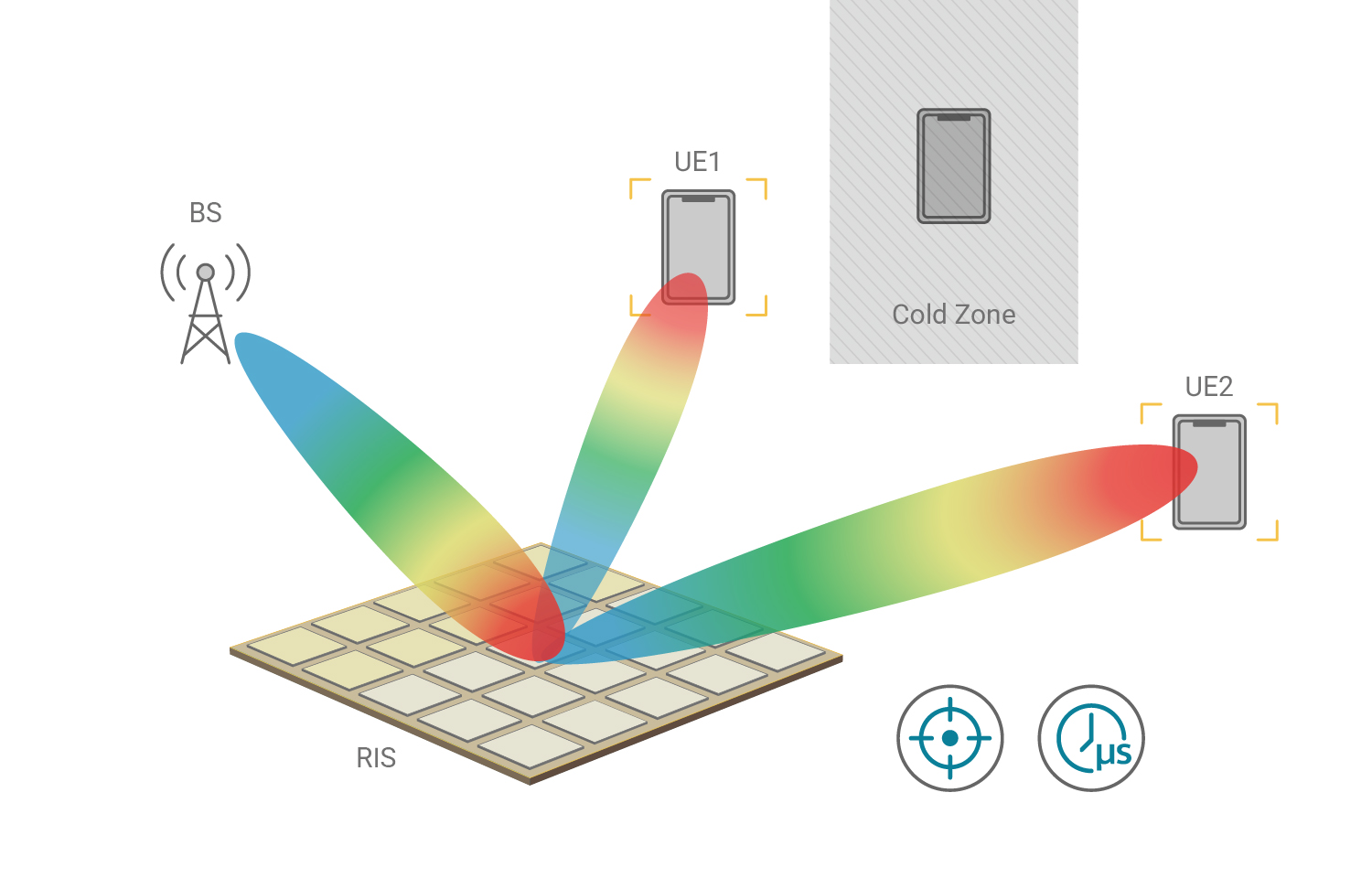
Dynamic Beam Alignment and Ultra-Low Latency
Microsecond-class hardware control dynamically steers the communication beam using real-time sensing data, closing the loop between sense and act.
What is ISAC and How Does It Work?
Instead of running independent hardware, ISAC natively binds data transmission and radio sensing into a single, unified wave. At the physical layer, advanced waveform designs—such as 5G NR-based OFDM combined with FMCW-like subcarriers—allow a single pulse to carry both QAM-modulated data and coherent radar markers. By capturing reflected waves while maintaining high-speed connectivity, this dual-purpose signal achieves sub-centimeter accuracy, capturing minute channel variations to unlock breakthroughs in high-precision, non-contact vital sign monitoring.
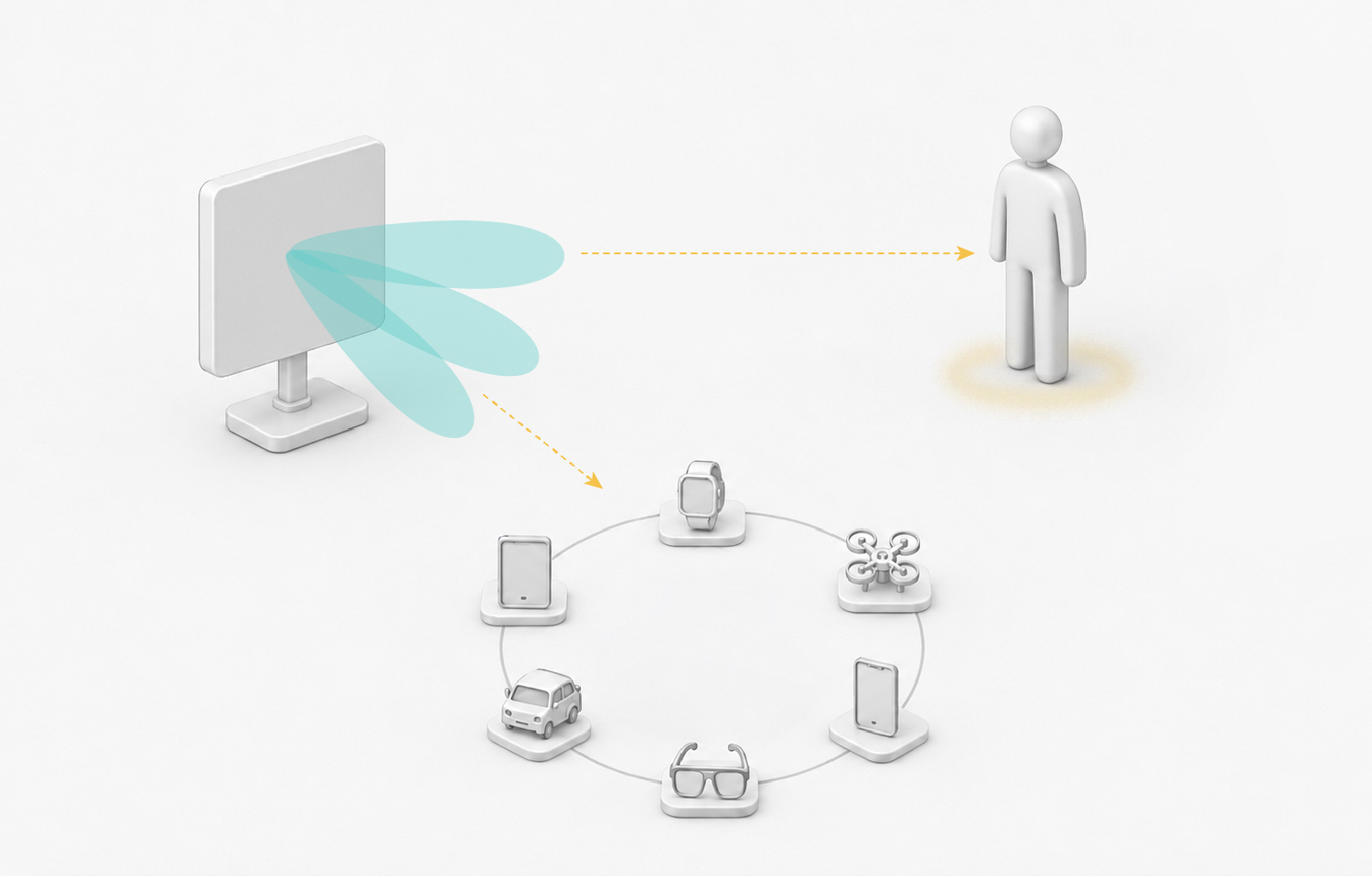
Why mmWave for ISAC? Unlocking the Physics of Solutions

Large Bandwidth = High Capacity + Range Resolution
mmWave bands offer far more bandwidth than sub-6GHz. Two things follow directly from that: Range resolution improves as bandwidth increases: ΔR = c / (2B), Data capacity improves as bandwidth increases: C = B · log₂(1 + SNR)
Beamforming = High Angular Resolution via Massive Antenna Arrays
The short wavelengths of mmWave allow the deployment of massive antenna arrays on compact devices. Through precise phase and gain control, it generates ultra-narrow beams (pencil beams), enabling high-precision spatial positioning and target angle estimation.
Overcoming mmWave Physics Bottlenecks: Path Loss & Blockage
Despite its immense physical advantages, mmWave propagation suffers from severe path loss and vulnerability to blockage, requiring precise, dynamic beam alignment. TMYTEK provides industry-leading frontends engineered to conquer these challenges:
BBox: Precise Beam & Gain Control
Driven by high-speed SPI control, BBox, beamformer, achieves microsecond-class beam switching to adjust radiation angles in near real time and track moving targets without dropout.

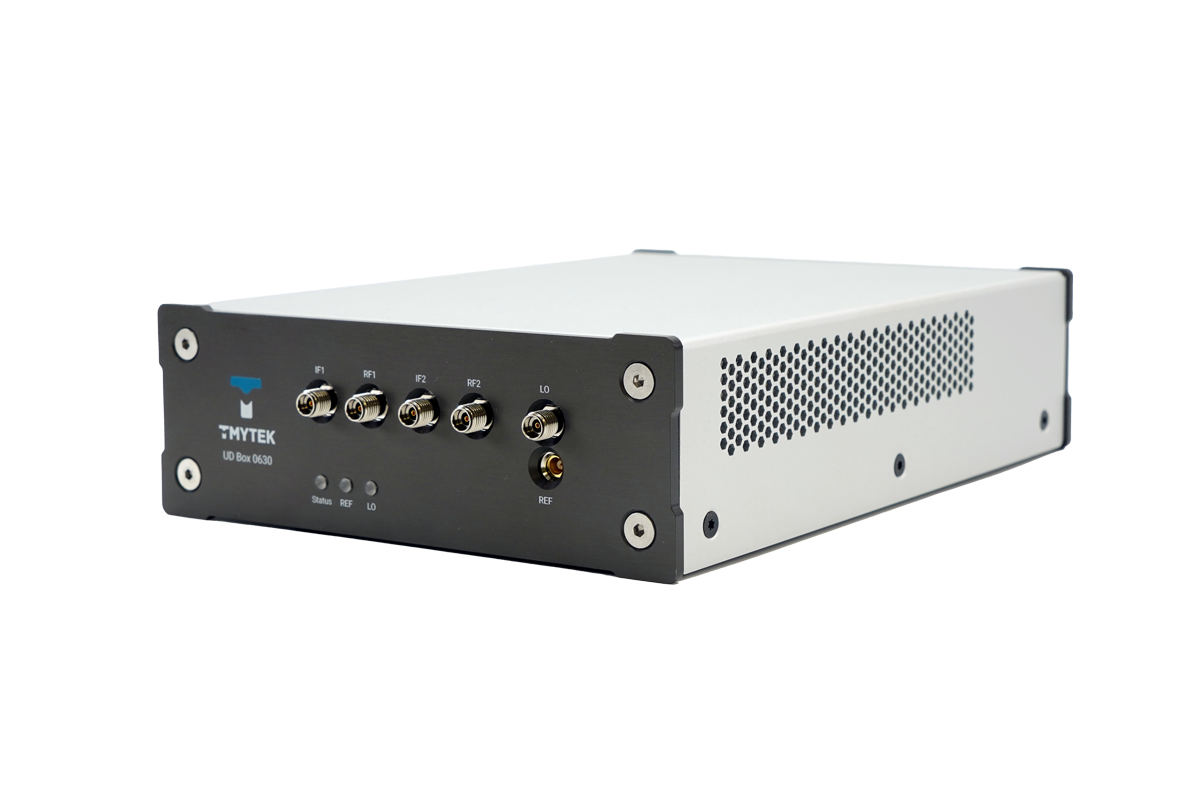
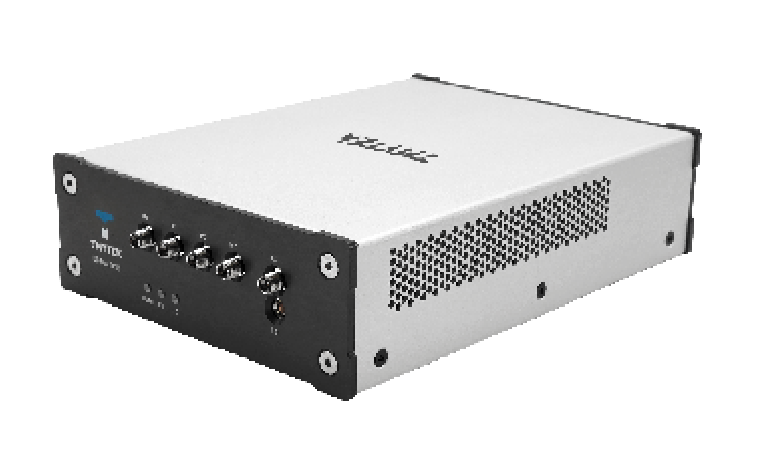
UD Box: Ultra-Wideband Frequency Translation
Seamless up/down conversion across wide bandwidths, bridging baseband instruments and mmWave RF frontends with high-fidelity signal transfer and exceptionally low phase noise.
RIS: Dynamic Beam Control & Blockage Mitigation
Designed for dynamic beam control and effective blockage mitigation. When Line-of-Sight (LoS) paths are severely obstructed, RIS acts as an intelligent electromagnetic mirror to re-route mmWave beams around obstacles via high-speed SPI control.

Flexible Topologies for Future 6G Networks
Source: Qualcomm
• US$300.5B — 2029 Global Market Forecast
• 8.9% — CAGR (2024–2028)
Sensing-capable networks represent a core pillar of future 6G technology, unlocking massive economic value across autonomous driving, smart cities, and healthcare.
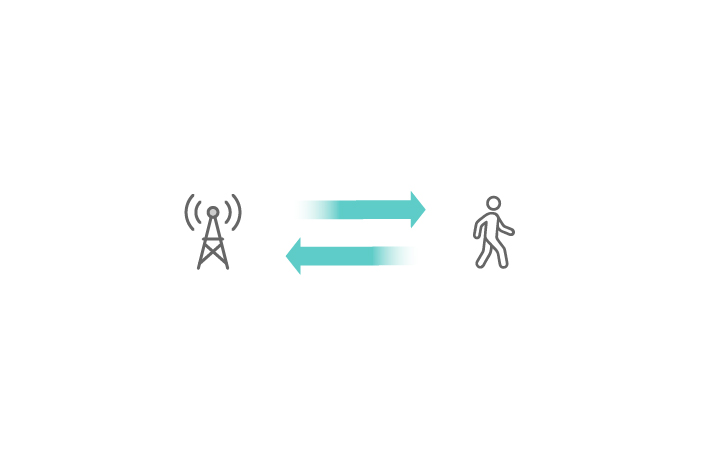
Monostatic
Transmitter and receiver are co-located in the same entity.
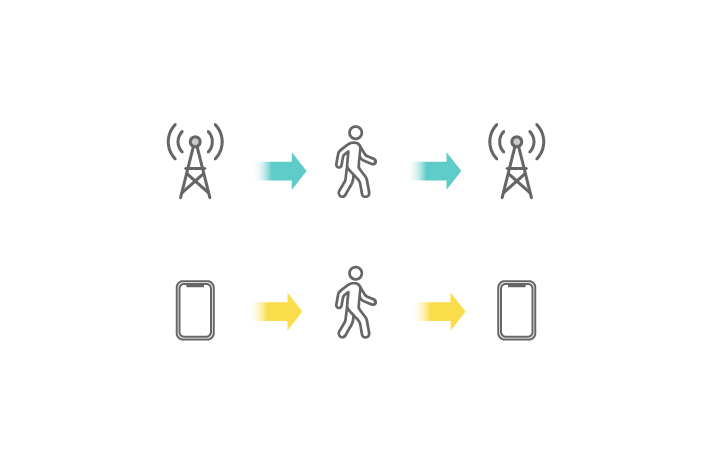
Bistatic
Transmitter and receiver are located in different entities. Perfect for large-scale coverage and V2X testing.
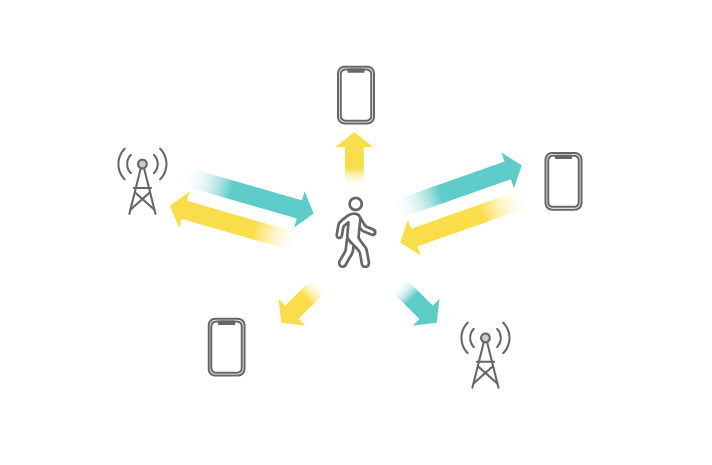
Multistatic
Network and device collaboration, where multiple sensing receivers capture reflected signals from one or more transmitters.
The mmWave ISAC System Architecture
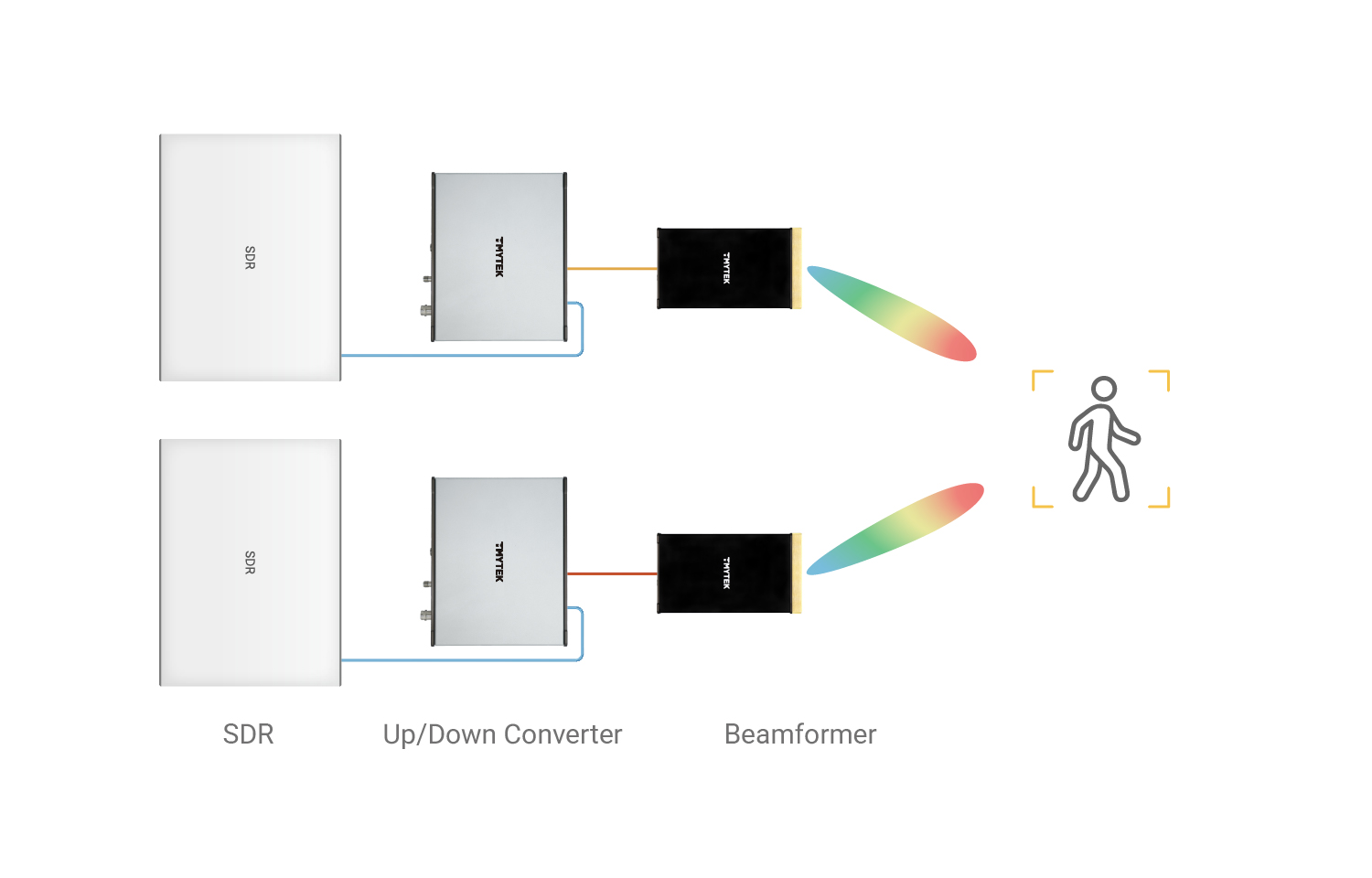
Building an ISAC system from scratch means confronting severe phase noise and complex synchronization challenges. TMYTEK's plug-and-play mmWave testbed absorbs this hardware complexity so researchers can focus purely on algorithms. The architecture splits cleanly into three layers:
• Baseband Layer: central coordination via MATLAB/Python scripts
• Frequency Conversion Layer: TMYTEK UD Box handles low-phase-noise up/down conversion
• Analog Front-End Layer: TMYTEK BBox manages multi-channel analog beamforming to capture weak scattered echoes
By dropping BBox into an existing communication setup, researchers can prototype advanced JCS/ISAC applications without investing in cost-prohibitive dedicated radar equipment.
Future-Proofing 6G: AI-Driven ISAC with RIS Integration
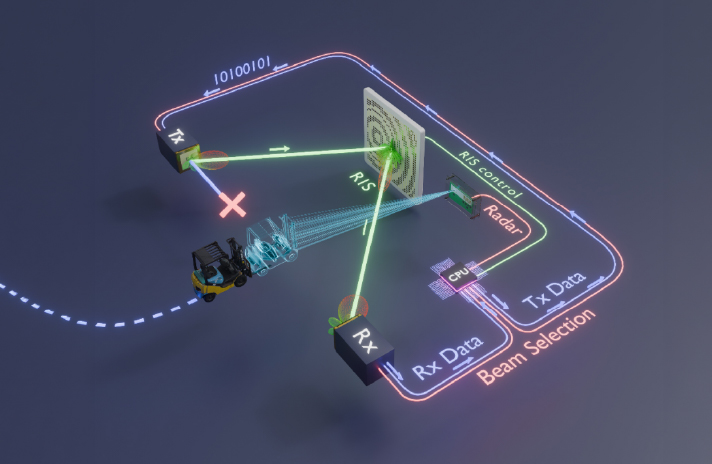
TMYTEK’s mmWave platform goes beyond basic sensing. By combining millimeter-wave beamforming with RIS and AI predictive tracking, researchers can construct a Truly Proactive Smart Radio Environment (SRE).
• Shifting from reactive routing to proactive prevention. The system utilizes machine learning to forecast obstacle movements and imminent link drops.
• When a Line-of-Sight (LOS) path is blocked, the central unit instantly reconfigures RIS in real-time, leveraging Non-Line-of-Sight (NLOS) paths to maintain connection.
• Minimizes signal attenuation during dynamic obstacle transit—limiting power drop to just 7 dB compared to a severe 20 dB complete outage.
Success Story

High-Precision mmWave Water Level Sensing Using mmW-SDR
Learn more
ISAC Physiological Signal Detection with mmWave APA
Learn moreRelated Products


BBox One 5G

Talk to Expert.
We’re here to help you find the best solution for your project.
Download Solution Brief
Download Solution Brief