TMYTEK XRifle Dynamic RIS Supports Kyoto University's Dynamic V2X Coverage Verification, Extending Non-Line-of-Sight Communication by Nearly Four Times
5.25 GHz Testing Validates Multi-User Signal Steering and High-Frequency 6G Deployment Scenarios
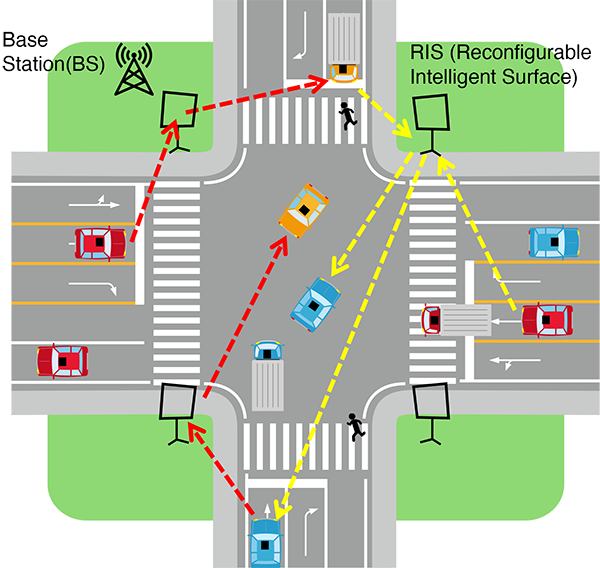 Envisioned V2X Network: RIS dynamically reflects signals to different vehicle terminals (UE).
Source: Harada Laboratory – https://www.dco.cce.i.kyoto-u.ac.jp/en/PL/PL_2025_03en.html
Introduction: Turning RIS-Driven 6G Communications from Theory to Practice
As we enter the 6G era, blueprints and forecasts for next-generation communication systems are being proposed across industries and academia. However, many of these visions still lack foundational experimental validation, which is critical to ensuring their feasibility and deployability. At Kyoto University, the Harada Laboratory embraces an empirical approach, constructing real-world testing scenarios to ground 6G technologies in practical realities.
In this study, the team focuses on one of the core challenges in Vehicle-to-Everything (V2X) communication: multi-user dynamic coverage. To address this, the Reconfigurable Intelligent Surface (RIS) technology—TMYTEK's XRifle Dynamic RIS—was integrated into the testbed to dynamically steer signals and switch reflection angles. The team verified the RIS system’s ability to operate in dynamic multi-user environments, simulating key conditions expected in future 6G deployments.
Background and Challenges: High-Frequency V2X Communication Limitations
Future intelligent transportation systems and autonomous driving require stable and real-time V2X communication. However, high-frequency wireless systems (such as mmWave) present critical technical challenges in real-world environments:
- Line-of-sight dependency: High-frequency signals degrade severely when obstructed by buildings or vehicles.
- Multi-user coverage: A single base station often struggles to simultaneously target multiple moving terminals.
- Limited beam resources: Fixed beamforming architectures cannot dynamically service dispersed users.
To emulate these real-world challenges while avoiding regulatory and hardware constraints tied to mmWave frequencies, the Harada Laboratory selected the 5.25 GHz band (n79, within FR1). Though not a commercial mmWave frequency, it shares similar propagation behavior in terms of directionality and blockage, making it an ideal test frequency for evaluating RIS in future 6G scenarios.
Key Technical Merits of Using 5.25 GHz
- Close-to-mmWave characteristics for signal directionality and shielding
- Bypasses FR2 regulatory constraints, enabling flexible system design and academic validation
- Clearly observable beam control effects suitable for RIS evaluation
- Effectively simulates 6G use cases such as V2X, dynamic multi-terminal, and NLOS (non-line-of-sight) scenarios
Importantly, this study did not focus on maximizing throughput but on enhancing connectivity—the core challenge of V2X. Ensuring signals reach obstructed or misaligned terminals is essential to cooperative mobility and safety.
Despite operating in FR1, the test utilized a full 5G NR framework, aiming to verify how a base station could dynamically redirect transmission toward multiple UE using RIS control, assessing both steering effectiveness and spatial resource management.
RIS-Based Coverage Architecture: Signal Steering and Multi-UE Control with TMYTEK XRifle Dynamic RIS
The experiment demonstrated a novel RIS use case: not merely signal extension, but spatial direction control. TMYTEK’s Dynamic RIS enabled dynamic switching of reflection angles, allowing a single gNB to serve multiple users without physically reconfiguring hardware.
This spatial resource steering capability opens up opportunities for compact V2X base stations and SDMA (spatial division multiple access) implementations. The TMYTEK RIS, featuring modular design and remote control, was seamlessly integrated with directional Yagi antennas, making it suitable for academic prototyping and field validation.
System Configuration:
- gNB (base station): Directional transmission via Yagi-Uda antennas
- TMYTEK XRifle Dynamic RIS: Electrically steerable reflection angles
- UE1 / UE2: Placed at different RIS-reflected signal paths
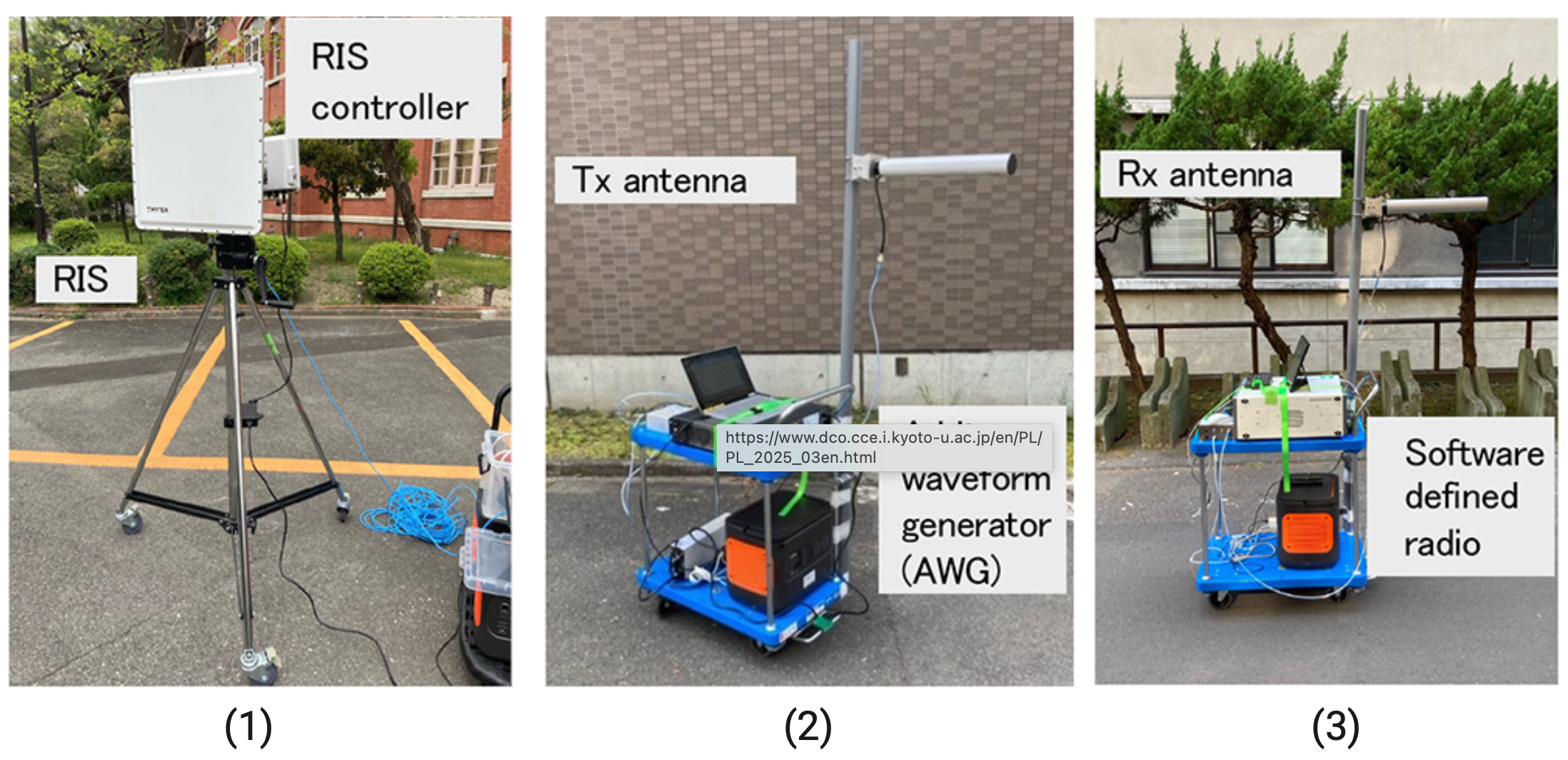 V2X testbed setup with (1) TMYTEK Dynamic RIS, (2) transmitter, and (3) receivers
Source: Harada Laboratory – https://www.dco.cce.i.kyoto-u.ac.jp/en/PL/PL_2025_03en.html
V2X testbed setup with (1) TMYTEK Dynamic RIS, (2) transmitter, and (3) receivers
Source: Harada Laboratory – https://www.dco.cce.i.kyoto-u.ac.jp/en/PL/PL_2025_03en.html
The original base station could not reach both UE simultaneously. With RIS switching, signals were steered toward each UE, extending the service area and network efficiency.
Experimental Results: Verifying Dynamic Reflection and Extended NLOS Transmission
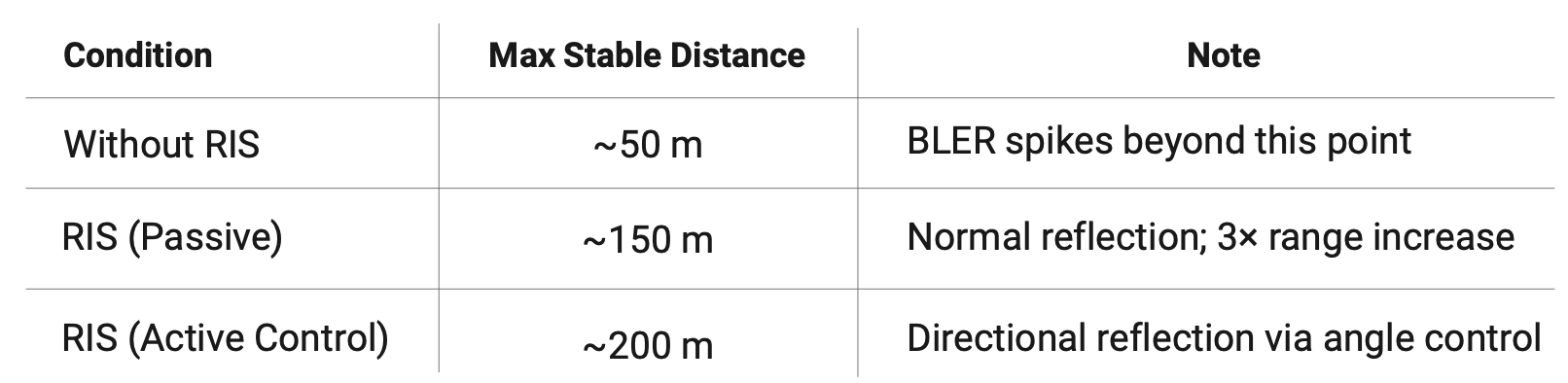
One of the most striking findings was the nearly four-fold increase in stable transmission distance in NLOS conditions—from approximately 50 meters without RIS to 200 meters with electronically controlled reflection. The XRifle Dynamic RIS not only improved signal delivery but also mitigated blind spots and obstructions common in high-frequency environments.
By adjusting reflection angles to 0°, 40°, and 60°, the test demonstrated that signal coverage could be tailored to specific scenarios such as frontal transmission, along curved roads, and toward distant endpoints. This adaptability confirmed RIS’s potential as a key spatial element in 6G PHY-layer infrastructure.
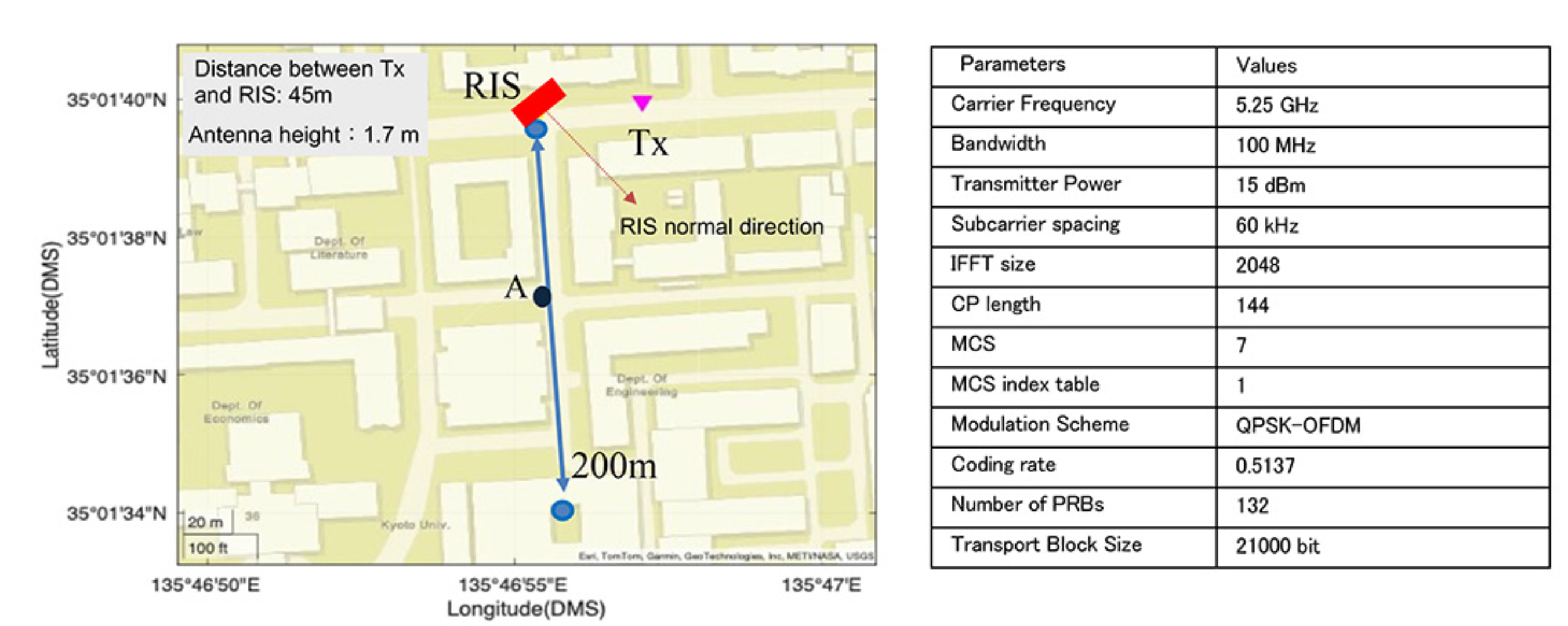 Installation setup of the transmitter (Tx) and TMYTEK XRifle Dynamic RIS, including the RIS normal direction and 5G signal parameters.
Source: Harada Laboratory – https://www.dco.cce.i.kyoto-u.ac.jp/en/PL/PL_2025_03en.html
Installation setup of the transmitter (Tx) and TMYTEK XRifle Dynamic RIS, including the RIS normal direction and 5G signal parameters.
Source: Harada Laboratory – https://www.dco.cce.i.kyoto-u.ac.jp/en/PL/PL_2025_03en.html
This experiment evaluates two major technical perspectives:
Experiment 1: Multi-User Switching
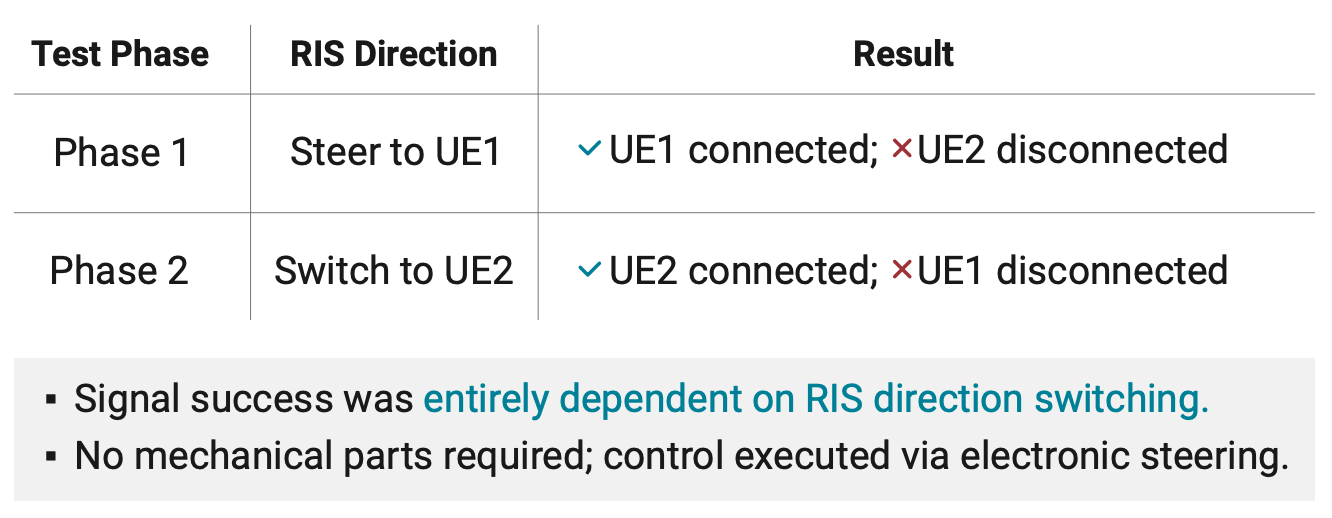
Experiment 2: Distance and Block Error Rate (BLER)
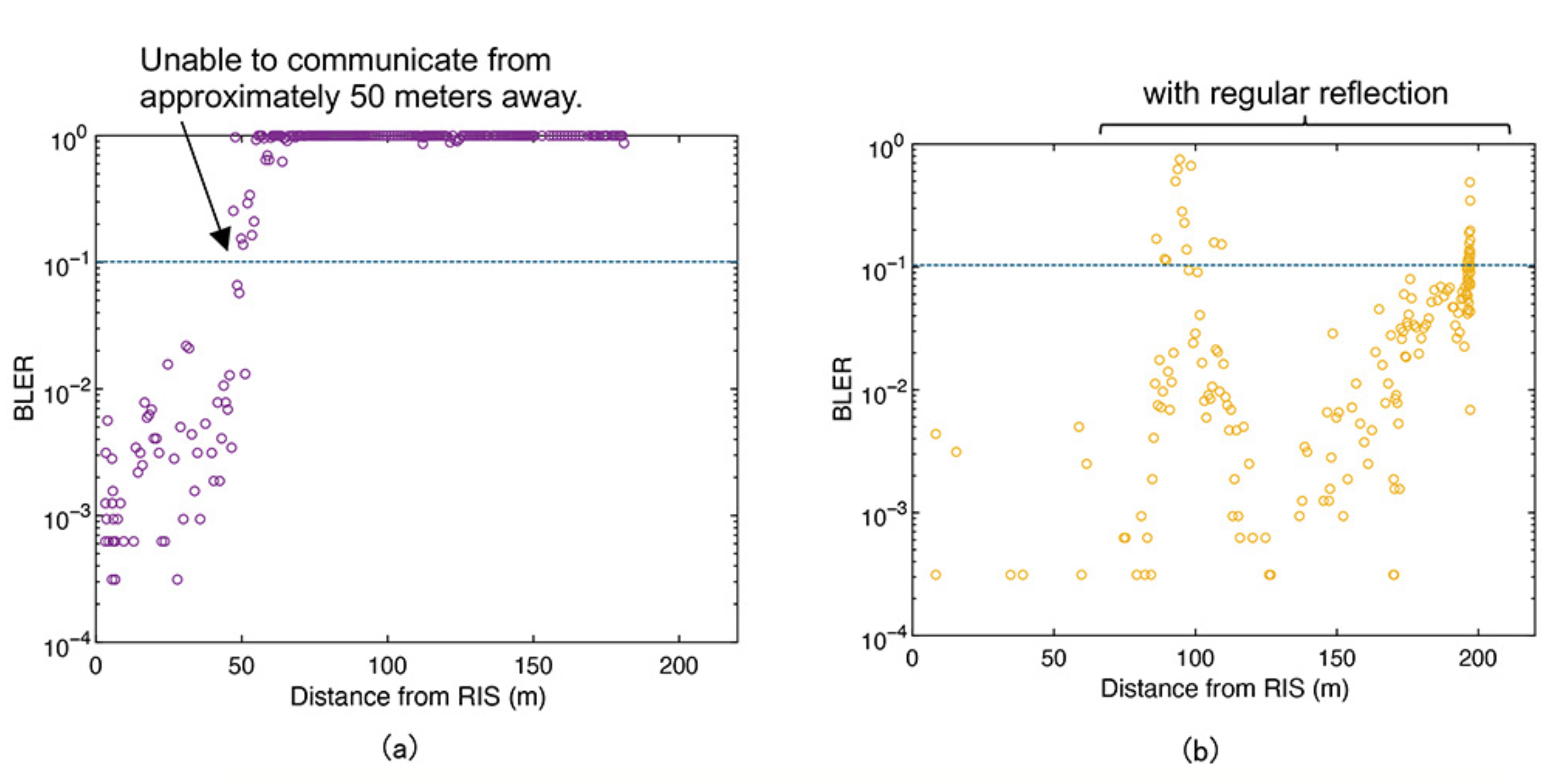
This experiment compared the transmission performance of the system under three conditions: without RIS, with passive RIS (no control), and with electronically controlled RIS. The block error rate (BLER) was used as the main performance metric, with a target of < 10⁻¹.
- RIS Size: 510 x 510 x 57 mm
- RIS Gain: 44.6–46.2 dB
- Antenna: Yagi (15 dBi, 1.7 m height)
- BLER Target: < 10^-1
Coverage Distance Validation
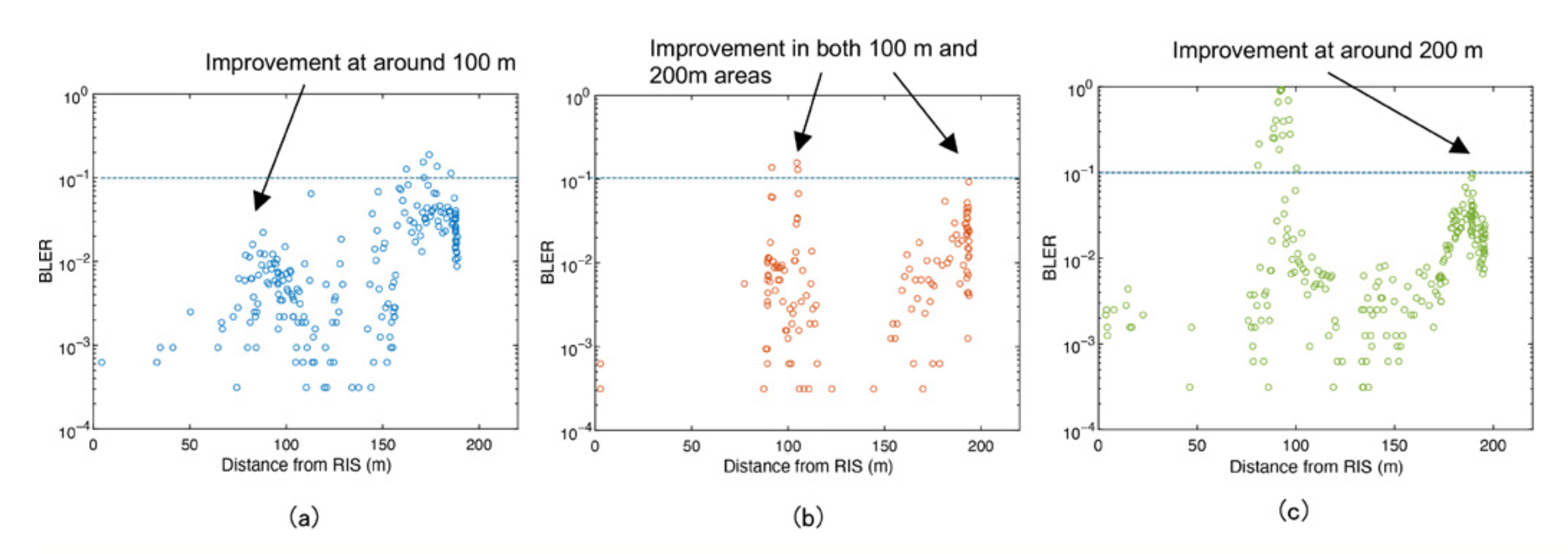
The figure below illustrates the transmission characteristics across these scenarios. Without RIS, the maximum stable transmission range was about 50 meters, beyond which BLER rapidly increased. When the RIS was installed without control (passive mode), normal reflection extended the range to nearly 150 meters, although a noticeable degradation occurred around 100 meters. With RIS electronically steered, the signal achieved a stable range up to 200 meters, and the reflection direction could be dynamically adapted to match different spatial requirements.
Reflection Angle Effect
The figure below illustrates the evaluation in which the research team activated the TMYTEK XRifle Dynamic RIS and tested three reflection angles—0°, 40°, and 60°—with respect to the RIS normal direction. The 40° angle corresponds to a vehicle receiver positioned outside the line of sight, along the road. The results demonstrated that RIS effectively mitigated signal degradation previously observed around 100 meters.
Notably, when the reflection angle was set to 40°, signal improvements were observed at both 100 m and 200 m distances, even though the receiver was not directly in the RIS’s path. This reflects a four-fold increase in coverage range compared to the non-RIS scenario. An angle of 0° yielded optimal performance at 100 m, while 60° provided the best results at 200 m.
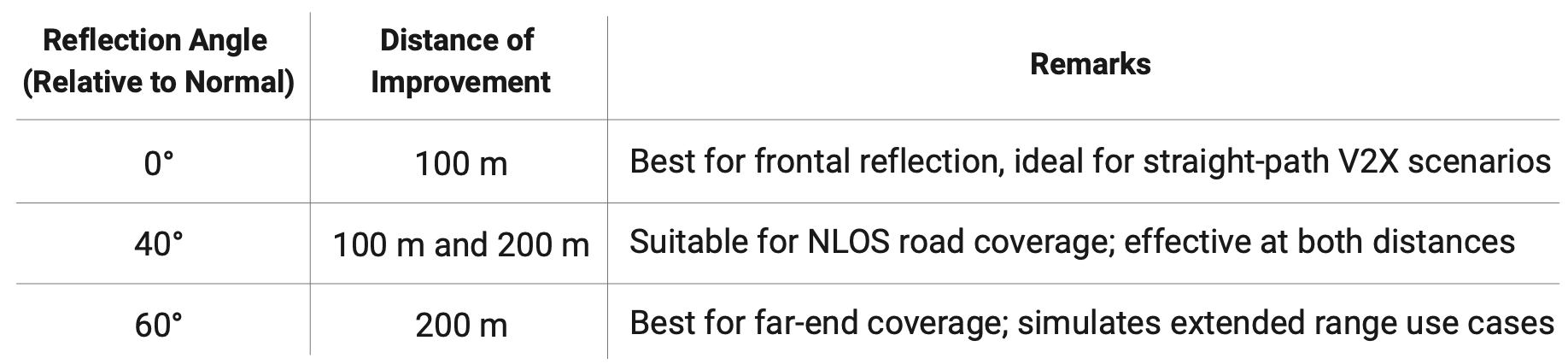
This proves that TMYTEK XRifle Dynamic RIS is not only capable of directional steering but also extends signal coverage, reduces dead zones, and supports non-line-of-sight (NLOS) transmission. By controlling the reflection angle electronically, RIS enables adaptive coverage, and the tested transmission distance shows a nearly four-fold improvement over non-RIS configurations—significantly boosting both range and reliability of 5G links.
Technical Insights: Envisioning Future Directions in 6G and V2X Wireless Research
Through this XRifle Dynamic RIS experimental study, Kyoto University's Harada Laboratory has delivered forward-looking insights for the wireless communication domain—particularly in high-frequency 6G and V2X scenarios—by demonstrating tangible advances in spatial signal control, adaptive coverage, and empirical validation of RIS technologies.
The experimental results from Kyoto University’s Harada Laboratory, powered by TMYTEK’s XRifle Dynamic RIS, provide future-facing insights for next-generation wireless systems:
- Mid-Band Validation as a Transitional Pathway
Selecting the 5.25 GHz band offered a regulatory-safe sandbox with propagation characteristics similar to mmWave, making it ideal for emulating high-frequency V2X conditions and accelerating pre-standard 6G research. - RIS as a Programmable Spatial Controller
The ability to electronically steer the reflection angle enabled RIS to dynamically allocate directional beams among users. This validates RIS as a programmable RF extension and a candidate enabler for SDMA in smart infrastructure. - First-Ever Quantitative Benchmark for RIS-Driven NLOS Expansion
The experiment offers rare empirical evidence—extending stable range from 50 to 200 meters—solidifying RIS’s role in overcoming urban propagation barriers. - Redefining Performance Priorities-From Peak Rate to Reliable Connectivity
The study prioritized robust communication under challenging environments over sheer throughput, highlighting a paradigm shift toward resilience, which is vital for intelligent transportation systems. - Modular System Design Unlocks Scalable Innovation
The plug-and-play architecture, combined with API-level control, accelerates deployment and experimentation. It positions RIS not just as a research tool, but as a scalable component of real-world 6G ecosystems.
About TMYTEK XRifle Dynamic RIS
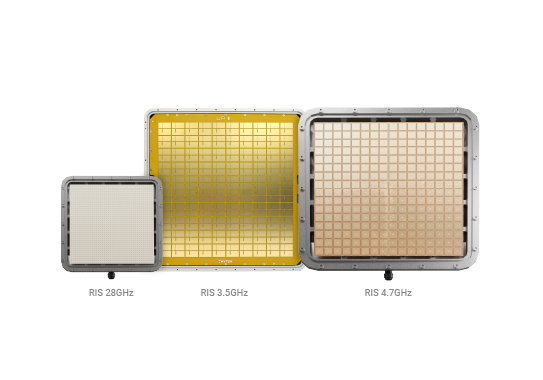
The XRifle Dynamic RIS is TMYTEK’s advanced reconfigurable intelligent surface (RIS) solution designed to enhance signal coverage across 5G FR1, FR2, and FR3 bands—especially in challenging non-line-of-sight (NLOS) environments. Engineered for both research and deployment scenarios, the system features a modular architecture, tri-band support (3.5 GHz, 4.7 GHz, 28 GHz), a graphical user interface (GUI), and full API access for dynamic spatial signal control in 5G/6G applications.
- Multi-Band Module Support: Offers three module variants—3.5 GHz, 4.7 GHz, and 28 GHz—enabling flexible combinations to emulate FR1, FR2, and FR3 scenarios based on deployment needs.
- Centralized Multi-Module Control: A single controller can manage up to four RIS modules simultaneously, supporting mixed-frequency configurations to improve coverage efficiency and streamline system integration.
- Real-Time Control and Seamless Integration: Equipped with TMYTEK’s GUI, TMXLAB KIT, and an open API, the system allows remote angle tuning and effortless integration with a variety of base stations, antenna arrays, and open-source platforms.
- Modular Design with High Gain: Delivering up to 46.7 dB RCS gain, the RIS modules operate without mechanical movement—ideal for signal redirection in NLOS and obstructed environments.
XRifle Dynamic RIS addresses one of the most critical challenges in 5G and 6G network deployment—ensuring reliable connectivity in complex spatial conditions. Its flexible control capabilities and centralized management architecture empower both research institutions and industry partners to build smarter, more adaptive wireless infrastructure at scale.